
Planning the site before a scheduled visit can help the inspection team reach the relevant work area and assess the work that is ready to be seen. These NYC TR1 inspection site access requirements are practical coordination steps, not a substitute for approved plans, applicable code requirements, or the project team’s inspection program. Confirm the specific inspection scope and timing with the responsible project professionals.
What does site access mean for a TR1 inspection?
For planning purposes, access means the inspector can enter through the agreed point, move safely to the relevant location, and view the condition scheduled for inspection. The exact location and readiness depend on the inspection type and approved project documents. A clear route alone does not make concealed or incomplete work inspectable, and access does not establish that work complies.
Begin by identifying the scheduled scope. Ask the registered design professional or other responsible coordinator which work item, area, and records should be available. Use project documents and current directions rather than a general online checklist to decide what must be inspected. A useful pre-visit question is: “What must be visible, where is it, and who will confirm that it is ready?” If those answers differ among team members, resolve the difference before the appointment.
Who should coordinate entry and the inspection area?
Assign one person to coordinate arrival and access on the day. Depending on the project, that may be a contractor, superintendent, owner’s representative, or another designated contact. The person should know the route and have a way to reach the relevant trade or project professional if questions arise. A backup contact is useful when the primary contact may be occupied with active work.
- Confirm the appointment window and site entry procedure with the inspection provider.
- Give accurate arrival instructions, including the correct entrance and check-in steps.
- Arrange an escort when access controls, building rules, or site layout make one necessary.
- Identify who can answer questions about scope and who can locate project records.
- Tell the coordinator about access limitations, active operations, or changes to the planned area.
Do not assume a visitor can enter tenant spaces, locked rooms, roofs, excavations, or controlled areas without advance coordination. Secure permissions through the building or project team. Review the agency’s TR1 and special inspection FAQs for related background, and use the agency information page for company context.
Build a simple arrival plan
A good arrival plan is specific enough that a visitor who has never been to the site can follow it. Include the street entrance, the person to contact, check-in instructions, and the destination after entry. If a visitor must use a particular elevator, stair, gate, or sign-in desk, say so plainly. Avoid sending only a building address when several entrances or work areas are possible.
For a multi-tenant building, confirm access permissions with the party who controls the relevant space. For an active construction site, coordinate with the site contact who understands current restrictions and operations. If the route changes on the day because of deliveries or temporary work, tell the inspector and escort rather than leaving them to find another way. Do not bypass barriers or enter an area without authorization.
How can the team prepare a safe route?
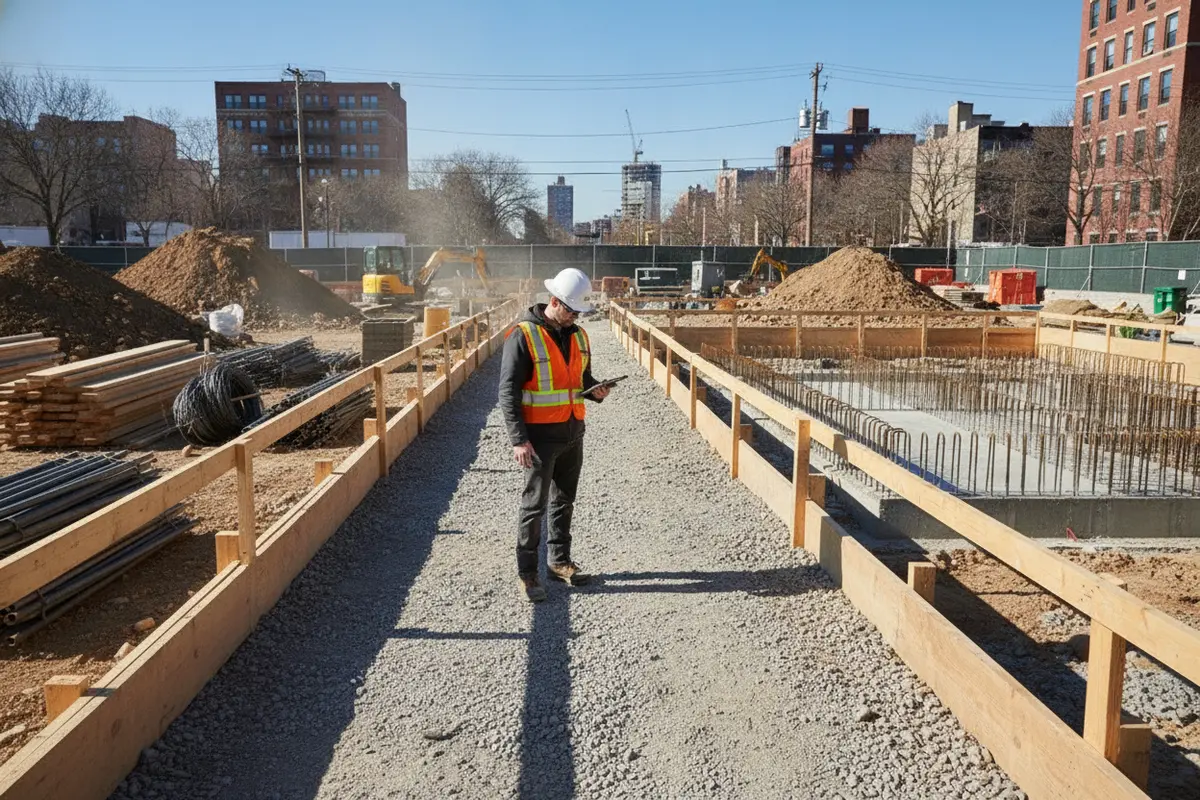
Walk the route from the agreed entrance to the inspection location before the appointment. Look for blocked doors, stored materials, loose debris, wet or uneven surfaces, low-clearance areas, cords, and other obstructions. Address hazards through the site’s established safety procedures. Do not remove barriers or use a shortcut through a restricted area simply to save time.
Keep both the path and the immediate work area orderly. Tools, temporary materials, and deliveries should not obstruct passage or prevent a clear view. If a concern cannot be corrected before the scheduled time, notify the responsible site contact and inspection coordinator so they can discuss a safe alternative or rescheduling. The inspector should not be asked to proceed into an area the project team considers unsafe.
Check the route in sequence
Start at the actual visitor entrance, not at the closest point to the work. Confirm that the person arriving can identify the door, complete any check-in, and reach the right level or zone. Continue along the full path and check each transition, such as a threshold, temporary ramp, stair landing, or doorway. Then look at the work area itself: can the visitor approach the condition without crossing a prohibited zone or interrupting an operation?
Think through likely changes between the walk-through and appointment time. A delivery, a shift change, or movement of temporary storage can make yesterday’s clear route unusable. If the site is dynamic, have the coordinator recheck shortly before the visit. When a route cannot remain available, agree on another authorized route in advance and communicate it clearly.
What work should be visible and ready?
Confirm the scheduled work item is at the stage when it can be observed. If concrete, finishes, backfill, or another subsequent operation will conceal a condition, coordinate the inspection before concealment when the inspection scope calls for viewing it. The project team must determine the required sequence and scope; a general checklist cannot determine the inspection obligations for a particular job.
Compare the planned inspection area with the approved documents and current work status. Make access available to the exact location, and identify anything unfinished, changed, or not ready. Do not remove protective measures or alter work solely to make it appear ready. If the installed or exposed condition differs from the plans or expected condition, raise it with the responsible design professional before treating the visit as routine.
Use a location-specific readiness check
Instead of saying “the work is ready,” identify it precisely. A coordinator might note the floor, room or grid reference, the particular assembly or system, and the point of access. The location should match the documents the project team uses. This reduces the chance that the escort leads the inspector to a nearby but different item.
Next, verify the condition has not been covered, moved, or changed after the check. If the work is only partly complete, be clear about what can be seen and what remains. Do not present partial work as a complete inspection item. Ask the responsible professional whether the visit should proceed for the available scope or be moved to a later time. That decision should be based on the project’s requirements, not convenience alone.
Which records and information should be on hand?
Ask the project coordinator which documents are relevant to the scheduled inspection. Keep current approved drawings or other applicable records accessible to the people who need them. Where the scope calls for supporting information, gather it beforehand and identify who will provide it. A well-organized file can save time, but it does not replace required inspection or project documentation.
- Appointment details and the scope agreed for the visit.
- Relevant approved plans or details, with the applicable location easy to find.
- Available records, test information, or prior inspection documentation requested for this item.
- Names and contact information for the site escort and project decision-maker.
- A short note of open conditions, area restrictions, or changes that could affect access.
Use the official city source to verify current filing and inspection procedures rather than relying on an informal checklist. The NYC Department of Buildings provides building-code and project information. For related agency offerings, consult the inspection services catalog.
Make records easy to use
Having a large folder available is less helpful if no one can identify the relevant page. Before the appointment, label the current document set clearly and mark the location or detail the coordinator expects to discuss. If records are digital, ensure the designated person can open them at the site and knows which version is current. Avoid relying on a file that only one absent team member can access.
Keep documents organized without assuming every record must be handed over. The coordinator should confirm what is pertinent and how the project wants records shared. If a requested item is missing, say so before the visit and ask the responsible professional how to proceed. Do not substitute an outdated drawing or an informal note for a current approved record.
How can teams compare readiness before the visit?
Use this table as a coordination prompt, not as a code checklist or a guarantee that an item is within the inspection scope. For each row, name a responsible person and confirm unresolved items before deciding whether the appointment can proceed.
| Readiness item | Ready to coordinate | Needs follow-up | Who can resolve it |
|---|---|---|---|
| Entry and escort | Arrival point and contact are confirmed | Permission or instructions are unclear | Site coordinator or building representative |
| Route to work | Path is clear and conditions are communicated | Obstruction, restriction, or hazard remains | Site supervisor under site procedures |
| Work visibility | Scheduled item is exposed and identified | Work is concealed, incomplete, or not located | Contractor and responsible project professional |
| Records | Requested project information is accessible | Current document or requested record is missing | Project document coordinator |
| Scope and timing | Appointment matches ready work | Scope, stage, or timing has changed | Inspection coordinator and project team |
Apply the table to a realistic situation
Suppose a scheduled visit concerns a work area on an upper floor. The entrance and escort are confirmed, but a delivery is expected to block the normal corridor and the relevant work may be covered later that day. The table makes two separate questions visible: whether a safe, authorized route will be available at the appointment time, and whether the item will still be observable. The coordinator can address the delivery with the site supervisor and confirm timing with the responsible project professional.
Now consider a different situation: the route is clear and the work is exposed, but the team has not identified the drawing detail or current record relevant to the item. That does not automatically mean the visit must be canceled. It does mean the coordinator should determine who can locate the information and whether it is expected for this visit. Separating access, readiness, and documentation prevents a simple logistics check from being mistaken for a technical conclusion.
What should the coordinator confirm on inspection day?
Before the visit, verify that the site contact is available, the work area remains accessible, and the planned item has not changed since the readiness check. If site conditions changed, communicate that promptly. When the inspector arrives, direct them to the agreed location and identify relevant work and records without making assumptions about the inspection result.
If the work cannot be accessed or observed, ask what next step is appropriate for the circumstances. The project team may need to address a site condition, provide information, or arrange another visit. Record the coordination outcome and share it with the people responsible for scheduling and project compliance. A brief note of the time, location, issue, and agreed follow-up can help prevent conflicting instructions later.
Close the coordination loop after the visit
After the site visit, confirm what logistical follow-up remains. If an area was inaccessible, note the cause and the person responsible for resolving it. If the scope or work stage changed, make sure the updated information reaches the relevant project professionals. Avoid treating a coordination note as an inspection determination; preserve any formal inspection records according to the project’s process.
When a repeat visit is being considered, first clarify what must be ready and what changed since the prior appointment. Confirm the access route, permissions, work visibility, and any requested documents again. Repeating the same booking without addressing the reason access failed can reproduce the delay.
What commonly disrupts site access?
- Unclear entry instructions: The visitor reaches the property but cannot identify the correct entrance or check-in contact.
- Work area not ready: The scheduled item is incomplete, covered, or located somewhere other than expected.
- Active operations: Deliveries, trades, or temporary storage block the route or prevent observation.
- Missing coordination: No one on site can explain the scope or locate requested records.
- Late notice of change: The appointment remains scheduled after work stages or site conditions have shifted.
- Permission gap: The work is in a controlled room or occupied space, but access has not been arranged.
These are coordination issues, not findings about compliance. Reduce their likelihood with a short check at the time of booking, another closer to the appointment, and a day-of confirmation when site conditions are changing. The contact page is available for inspection coordination questions.
Frequently Asked Questions
Does a clear path mean the work is ready for inspection?
No. A clear route helps with access, but the work must also be at the appropriate stage and within the scheduled scope. Confirm readiness against project documents and with the responsible project professionals.
Does every TR1 inspection require an escort?
Not necessarily. Entry rules differ by building and project. Confirm whether an escort or advance permission is needed with the site or building contact before the appointment.
What if the work has already been covered?
Tell the project coordinator and responsible design professional promptly. Do not uncover, alter, or represent the work as inspectable without direction from the appropriate project professional. The next step depends on inspection scope and project circumstances.
Should the inspector be given project documents?
Have relevant, current records available when the scope or coordinator calls for them. Ask in advance which documents are useful, and keep approved project information organized and accessible.
What if the access route becomes blocked on the day?
Contact the site coordinator and inspection contact promptly. Do not direct anyone through an unsafe or unauthorized route. Explain the obstruction, confirm whether another approved route is available, and ask whether the visit should proceed or be rescheduled.
Coordinate the next step
A focused readiness check can help the scheduled visit proceed with fewer avoidable access problems. Confirm scope, entry arrangements, safe route, visible work, and requested records with the people responsible for the project. For general background, revisit the inspection FAQs and confirm project-specific questions with the appropriate professionals.
Clear coordination supports an efficient visit while leaving scope and compliance decisions to responsible project professionals and applicable requirements.
Leave a Reply