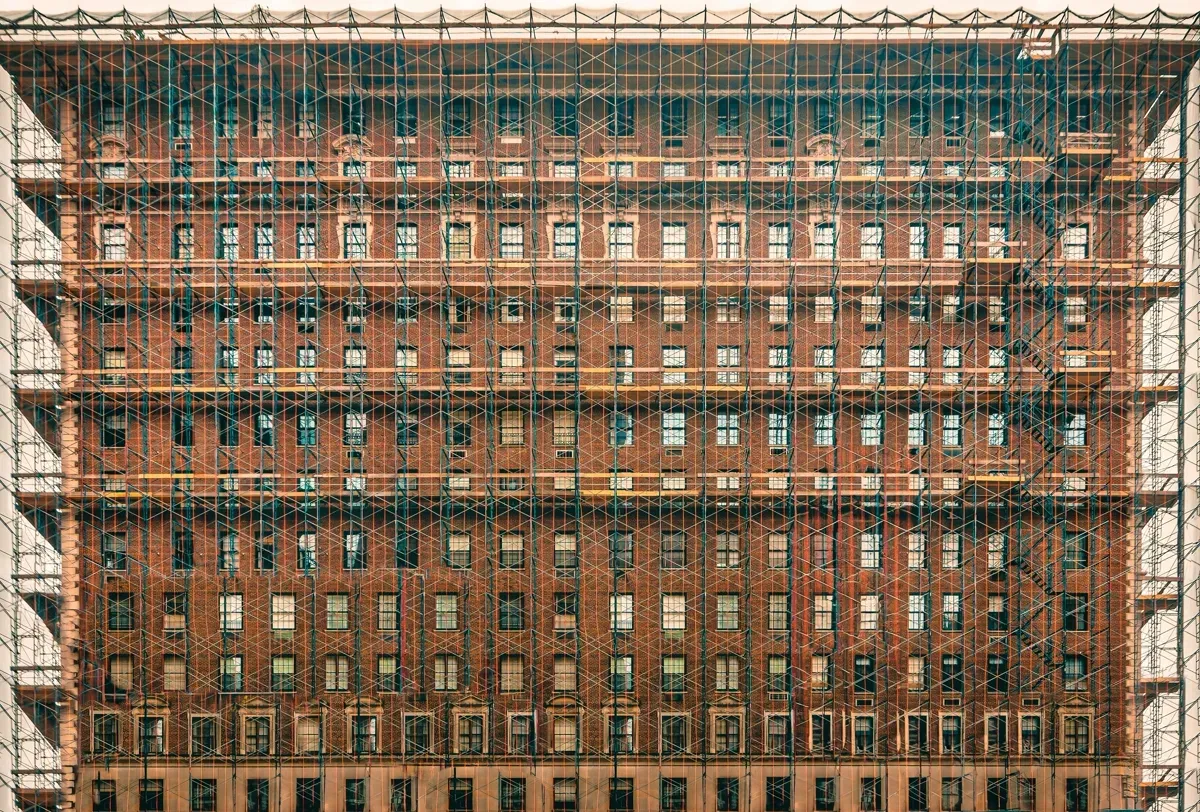
If you own or manage a building taller than six stories in New York City, Local Law 11 affects you directly. The law requires periodic facade inspections to protect public safety. Missed filings can trigger monthly fines and DOB violations, while an Unsafe facade condition can require immediate public protection such as a sidewalk shed.
With FISP Cycle 10 now underway (2025-2030), building owners across the five boroughs face new filing deadlines. This guide breaks down everything you need to know about Local Law 11 NYC requirements, from inspection timelines and costs to the penalties you face for non-compliance.
What Is Local Law 11 in NYC?
Local Law 11 is a New York City building code requirement that mandates periodic inspections of exterior walls and appurtenances for buildings greater than six stories in height. Enacted in 1998, it substantially amended the earlier Local Law 10 (1980) and expanded the scope of facade safety inspections across the city.
The program is commonly referred to as the Facade Inspection and Safety Program (FISP). Under FISP, a Qualified Exterior Wall Inspector (QEWI) must examine the entire building envelope, including rear and side walls, not just the street-facing facade.
The legal authority behind Local Law 11 comes from NYC Administrative Code Section 28-302 and the implementing rule 1 RCNY Section 103-04. These regulations establish the inspection schedule, filing procedures, and enforcement mechanisms that govern thousands of buildings across New York City.
Key Differences From Local Law 10
When Local Law 10 was enacted in 1980 after a fatal masonry collapse on the Upper West Side, it only required inspection of street-facing facades. Local Law 11 expanded that requirement in several critical ways:
- Full envelope coverage: All exterior walls must be inspected, including rear and side walls facing adjacent buildings
- Close-up inspection required: Hands-on examinations are performed at the locations and intervals required by the applicable rule, often using scaffolding, swing stages, lifts, or other access equipment
- Three-tier classification: Replaced the old “precautionary” filing status with Safe, SWARMP, and Unsafe categories
- Owner accountability: Reports must be signed by both the QEWI and the building owner
- Forced repair action: The same SWARMP condition at the same location cannot be reported as SWARMP for two consecutive cycles; if it remains uncorrected, it must be reported as Unsafe
Which Buildings Must Comply With Local Law 11?
Buildings higher than six stories in New York City are generally subject to FISP, regardless of use, including residential, commercial, mixed-use, condominium, cooperative, hotel, office, and institutional properties. The QEWI determines the required inspection scope under the current code and rules; certain portions, including some walls less than 12 inches from an adjacent building, may be treated under specific rule exceptions.
Building age and facade material do not by themselves remove a covered building from FISP. Landmark status is not an exemption: landmarked buildings must comply and may also need Landmarks Preservation Commission (LPC) approval before facade repairs. Owners should confirm their building status against the current DOB FISP records.
The NYC Department of Buildings estimates that about 17,000 structures are subject to FISP during Cycle 10. The majority of these buildings are located in Manhattan, though every borough has covered properties.
Note: Local Law 49 of 2025 took effect October 1, 2026 and amended the statutory framework for inspection intervals. It did not change the six-story coverage threshold. Owners should confirm how DOB’s implementing rules and current Cycle 10 guidance apply to their building.
FISP Cycle 10 Filing Deadlines (2025-2030)
Cycle 10 is the current report-filing cycle published by DOB. It began on February 21, 2025 and runs through February 20, 2030, with filing deadlines staggered into three sub-cycles based on the last digit of your building’s tax block number. Historically, FISP used five-year cycles; Local Law 49 of 2025, effective October 1, 2026, now allows inspection intervals set by rule between six and 12 years. Do not assume that statutory change by itself changes an assigned Cycle 10 filing deadline.
| Sub-Cycle | Block Numbers Ending In | Filing Window Opens | Filing Deadline |
|---|---|---|---|
| Cycle 10A | 4, 5, 6, or 9 | February 21, 2025 | February 21, 2027 |
| Cycle 10B | 0, 7, or 8 | February 21, 2026 | February 21, 2028 |
| Cycle 10C | 1, 2, or 3 | February 21, 2027 | February 21, 2029 |
You can find your building’s tax block number on your property tax bill or through the NYC Department of Finance ACRIS system. Reports must be filed electronically through the DOB NOW: Safety portal within 60 days of completing the critical examination. Check the NYC Department of Buildings facade compliance guidance for current filing instructions.
Important: All owner information in the FISP report must exactly match Department of Finance records, or the submission will be marked incomplete and penalties may still apply.
What Happens During a Local Law 11 Facade Inspection?
A complete FISP inspection uses methods selected by the QEWI, including required close-up physical examinations along each applicable facade. Here is what building owners should expect during the process:
- Hire a QEWI: You must engage a Qualified Exterior Wall Inspector, which is a licensed Professional Engineer (PE) or Registered Architect (RA) with at least seven years of relevant facade experience who has been accepted by NYC DOB.
- Arrange access equipment: The QEWI needs to physically examine the facade up close. This typically requires swing stages, boom lifts, or pipe scaffolding. Building owners are responsible for arranging and paying for access equipment.
- Close-up examination: The QEWI directs the critical examination of the building envelope, including walls, windows, cornices, parapets, fire escapes, guardrails, and other appurtenances. The rule permits selected inspection tasks to be performed by qualified individuals under the QEWI’s direct supervision, while the QEWI remains responsible for the report.
- Condition assessment: The inspector documents all observed conditions with photographs and drawings, identifying deficiencies by location and severity.
- Classification and report: The QEWI classifies the building’s facade as Safe, SWARMP, or Unsafe and prepares a technical report.
- DOB filing: The QEWI files the technical report electronically through DOB NOW: Safety within 60 days of completing the critical examination. The report must meet DOB filing and signature requirements.
Drones may supplement the initial survey, but NYC DOB still requires hands-on inspection for critical areas. A drone flyover alone does not satisfy FISP requirements.
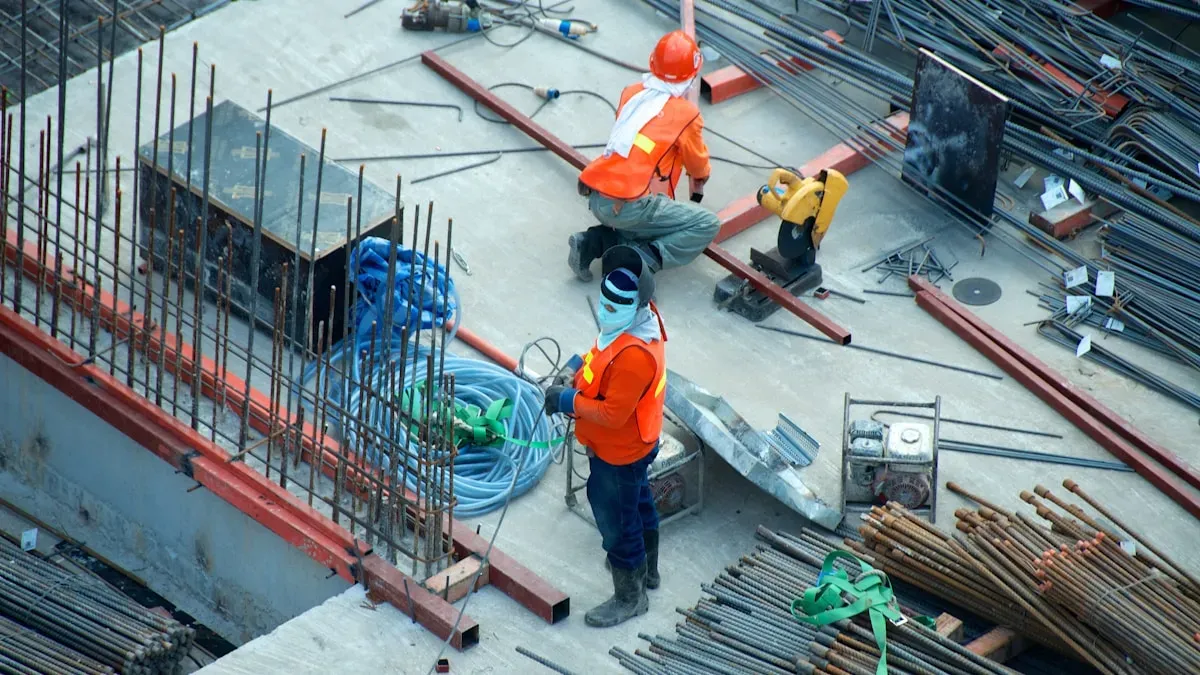
Facade Condition Classifications: Safe, SWARMP, and Unsafe
Every FISP inspection results in one of three classifications. Understanding these categories helps building owners plan their budgets and maintenance schedules.
Safe
The facade is in satisfactory condition. No repairs or maintenance are needed to maintain structural integrity, and the condition will not deteriorate to unsafe levels during the next five years. A Safe classification means no repair or maintenance program is required based on the reported conditions. The owner should continue routine maintenance and prepare for the next inspection cycle.
SWARMP (Safe With a Repair and Maintenance Program)
The facade is safe at the time of inspection but requires repairs or maintenance within the next five years to prevent deterioration. The owner must follow the QEWI’s repair and maintenance program and complete the work by the SWARMP completion date listed in the report.
A critical rule applies here: any SWARMP condition from one cycle that remains uncorrected by the next cycle’s inspection must be reclassified as Unsafe. This forces building owners to address deterioration rather than deferring maintenance indefinitely.
Unsafe
The facade presents a hazard to persons or property. An Unsafe classification means the facade presents a hazard to persons or property. This triggers several immediate obligations:
- The owner must immediately install the type and location of public protection required by the QEWI, such as a sidewalk shed, netting, or barrier
- The QEWI must promptly notify the owner, report the unsafe condition through 311, and file the required FISP3 notification with DOB
- Repairs must be completed within 90 days of filing the critical examination report, unless an approved extension applies
- A single unsafe condition on any portion of the facade results in an Unsafe classification for the entire building
Need help understanding your building’s facade classification? Contact our team for a consultation.
Penalties for Non-Compliance With Local Law 11
The NYC Department of Buildings enforces FISP requirements. Penalties begin the day after the applicable filing-window deadline: late filing is charged at $1,000 per month until an acceptable initial report is filed, in addition to the $5,000 annual failure-to-file penalty after the filing window ends.
| Violation Type | Penalty |
|---|---|
| Late filing (initial report) | $1,000 per month until an acceptable initial report is filed |
| Failure to file (initial report) | $5,000 per year |
| Failure to correct unsafe conditions | $1,000/month base penalty, plus escalating charges tied to sidewalk-shed length and duration under 1 RCNY Section 103-04 |
| Failure to correct SWARMP conditions | $2,000 |
FISP penalties can continue until an acceptable report is filed or the required conditions are corrected. Separate DOB violations, enforcement actions, and protective-measure costs may also apply, so owners should confirm the current DOB facade fees and penalties and address issues promptly.
How Much Does a Local Law 11 Facade Inspection Cost?
There is no single official NYC price for a Local Law 11 inspection. The total depends on building height, wall area, facade materials, access equipment, repair conditions, and whether follow-up filings are needed. Ask at least two qualified firms for written proposals that separate the QEWI scope, access equipment, repairs, filing fees, and construction oversight.
| Cost component | What to budget for |
|---|---|
| QEWI inspection | Obtain a written proposal based on the building’s height, facade area, materials, access, and inspection scope. |
| Access equipment | Ask whether swing stages, lifts, scaffolding, or other access equipment are included or billed separately. |
| Repairs and construction oversight | Costs depend on the conditions found; request a separate repair allowance or bid rather than relying on an inspection fee. |
| Initial FISP filing | $425 DOB filing fee |
| Amended or subsequent filing | $425 DOB filing fee |
| Extension of time to complete repairs | $305 DOB filing fee |
| Penalty waiver request | $140 DOB filing fee |
The non-DOB amounts are project-specific, not City-set estimates. Co-op and condo boards often fund inspection and repair work through reserve funds or special assessments. Planning against the assigned filing deadline and obtaining proposals early can reduce the risk of emergency costs when an Unsafe condition requires immediate public protection.
How to Hire a Qualified Exterior Wall Inspector (QEWI)
Choosing the right QEWI is one of the most important decisions a building owner makes during the FISP process. Here is what to look for:
QEWI Qualifications
- Must hold a current New York State Professional Engineer (PE) or Registered Architect (RA) license
- Must have a minimum of seven years of relevant experience in exterior wall design, installation, repair, or inspection
- Must be accepted by NYC DOB as a QEWI through an application and portfolio review process
- Must be registered in the DOB eFiling system with access to DOB NOW: Safety
What to Ask Before Hiring
- How many FISP inspections have you completed in the current and previous cycles?
- Do you carry errors and omissions insurance?
- Who will perform the close-up inspection work, how will the QEWI directly supervise it, and who will remain responsible for the final report?
- What is your turnaround time for the inspection report and DOB filing?
- Can you also design and oversee any required repairs?
Working with a licensed architecture or engineering firm that offers both inspection and repair design services can streamline the process. Rather than hiring separate consultants for inspection, repair design, and construction oversight, a full-service firm acts as a single point of contact throughout the compliance cycle.
Common Facade Issues Found During Local Law 11 Inspections
The type of deficiencies your QEWI finds depends largely on your building’s facade material. Here are the most common issues by material type:
- Brick masonry: Mortar joint deterioration, brick spalling, efflorescence (white salt deposits), lintel corrosion above windows, and cracking from freeze-thaw cycles
- Terra cotta: Loss of protective glaze, surface crazing, spalling, and anchorage system failure (the most common and dangerous terra cotta deficiency)
- Natural stone: Panel displacement from anchorage failure, erosion, spalling, and corrosion staining from internal metal anchors
- Precast concrete: Delamination, panel slippage, structural cracking, and surface spalling
- Curtain wall (glass and metal): Sealant failure, gasket deterioration, metal corrosion, and anchorage deterioration
Appurtenances are also frequent fail points during inspections. Fire escapes, parapets, cornices, guardrails, window sills, and balcony slabs all require careful examination.
2026 FISP Changes: What Building Owners Should Know
Local Law 49 of 2025 took effect on October 1, 2026. It amended NYC Administrative Code Section 28-302.2 so facade examinations occur at intervals set by rule between six and 12 years, and it moved the initial examination for a new building from the fifth to the eighth year after the applicable certificate or installation date. Read the enacted Local Law 49 text.
This statutory change does not erase the published Cycle 10 filing windows. DOB’s implementing rules and current filing guidance determine how the new interval framework applies to existing buildings and future cycles. Owners should continue to verify their assigned deadline in DOB NOW: Safety and with their QEWI rather than assume a longer interval.
Separately, the December 2025 Thornton Tomasetti review proposed additional program changes. Recommendations include a six-year baseline cycle, an abbreviated filing pathway for certain qualifying newer buildings, and a pilot to study drones and other technology. These recommendations are not a substitute for the enacted law or current DOB requirements.
Frequently Asked Questions About Local Law 11 NYC
How often are Local Law 11 inspections required?
Cycle 10 is the current DOB-published report-filing cycle, with three sub-cycles based on the last digit of the building’s tax block number and staggered filing windows. Local Law 49 of 2025, effective October 1, 2026, changed the statutory framework to allow inspection intervals set by rule between six and 12 years. Because implementation and assigned deadlines matter, verify your building’s current requirement in DOB NOW: Safety and with a QEWI.
What happens if my building fails a FISP inspection?
If your building receives an Unsafe classification, you must secure public safety immediately, ensure the required unsafe-condition notifications and filings are made, and complete repairs within 90 days of filing the critical examination report unless an approved extension applies. A SWARMP classification means the QEWI sets a repair-and-maintenance completion date between one and five years; the owner must complete the work by that date.
Can I use a drone for my Local Law 11 inspection?
Drones may be used for initial surveys, but NYC DOB still requires hands-on, close-up inspection by the QEWI for critical areas. A drone flyover alone does not satisfy FISP requirements. The proposed recommendations may expand drone use in future cycles, but they do not replace current hands-on requirements.
How do I find my building’s FISP sub-cycle deadline?
Check the last digit of your building’s tax block number on your property tax bill or through NYC ACRIS. Match it to the sub-cycle schedule: 10A (digits 4, 5, 6, 9), 10B (digits 0, 7, 8), or 10C (digits 1, 2, 3).
Does Local Law 11 apply to landmarked buildings?
Yes. Landmarked buildings must comply with all FISP requirements. Additionally, any facade repairs on landmarked buildings may require separate approval from the NYC Landmarks Preservation Commission (LPC) before work begins.
What is the difference between Local Law 10 and Local Law 11?
Local Law 10 (1980) only required inspection of street-facing facades. Local Law 11 (1998) expanded coverage to the entire building envelope, mandated close-up inspections, introduced the Safe/SWARMP/Unsafe classification system, and required both the inspector and building owner to sign reports.
Take Action on Local Law 11 Compliance
Staying ahead of your FISP obligations protects your building, your residents, and your investment. With Cycle 10 filing deadlines approaching, now is the time to schedule your facade inspection and address any outstanding repair needs.
AKS Architectural and Engineering Services, founded in 1996, brings decades of experience in NYC building code compliance to every project. Our licensed architects and engineers serve as your single point of contact for facade inspections, repair design, DOB filings, and construction oversight.
Leave a Reply