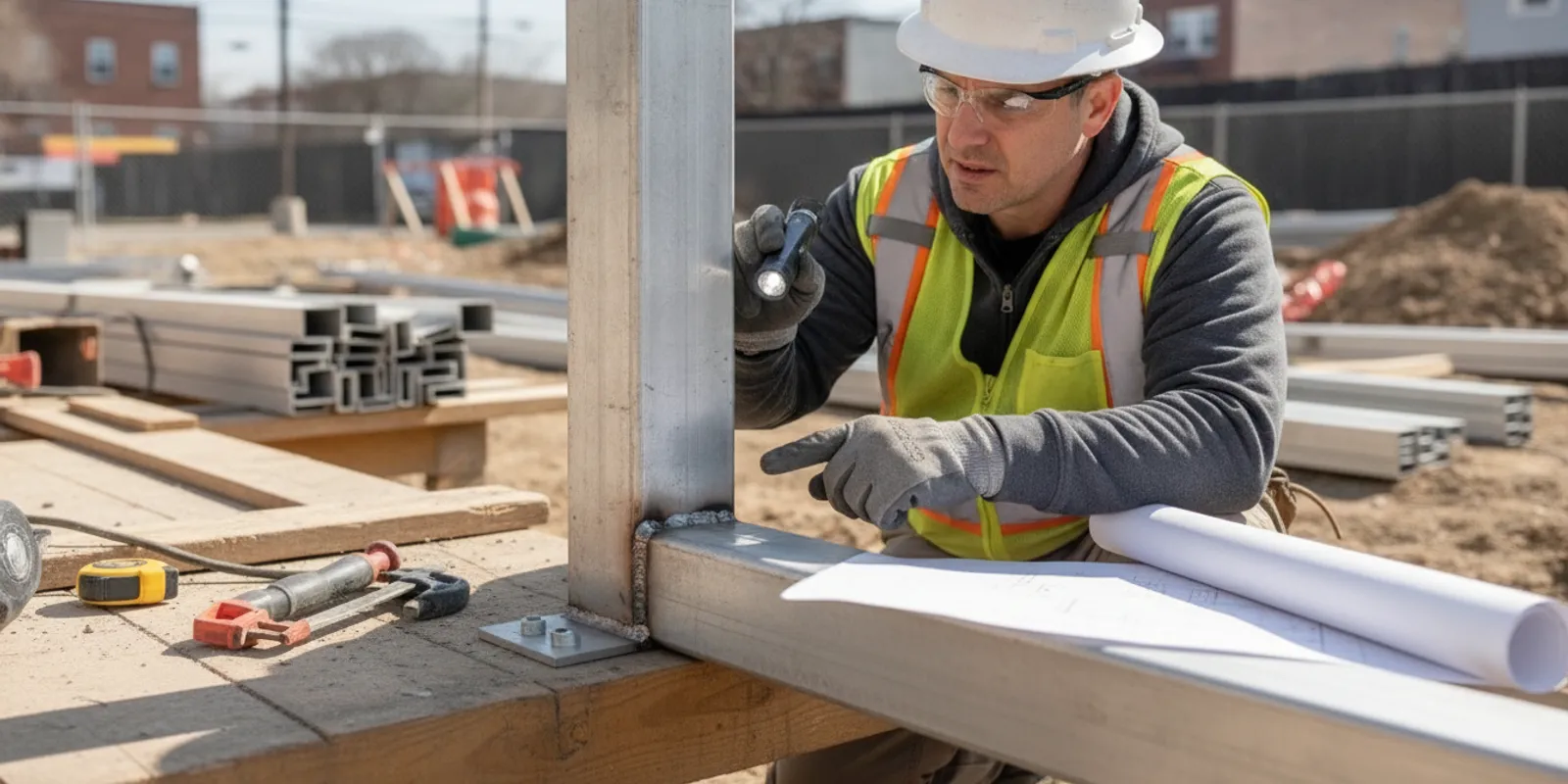
Planning a TR1 aluminum welding inspection in NYC starts with a clear scope, accessible work, and coordination between the design professional, installer, and inspecting agency. The inspection is a project compliance step, not a substitute for engineering, weld design, fabrication quality control, or any separate testing required by the approved documents. This guide explains what to confirm before the work is covered and how to keep the inspection and its records aligned.
Contact the inspection team to discuss your project
What should a TR1 aluminum welding inspection cover?
A TR1 aluminum welding inspection concerns the aluminum welding work identified for inspection on a particular project. The exact scope depends on the approved plans, applicable code requirements, project specifications, and the inspection schedule established by the registered design professional (RDP). Avoid assuming that every aluminum component, weld, or fabrication step has identical inspection requirements.
Start with the project documents. Identify where the aluminum is used, which connections are subject to inspection, and what the documents say about inspection timing, acceptance criteria, and any testing. The RDP should resolve design questions and confirm the applicable requirements. The contractor and fabricator should coordinate the work so the agency can observe the relevant conditions at the right stage.
The inspection is a third-party verification activity within the assigned scope. It does not transfer responsibility for design or construction from the people responsible for those activities. The special inspection agency observes and reports findings; it does not choose the connection design, direct means and methods, or approve a change on behalf of the RDP.
AKS Architectural and Engineering Services LLP operates as a NYC-registered special inspection agency. Its role in a project is bounded by the inspection assignment and the applicable requirements; do not treat a service listing as a replacement for project-specific direction from the RDP or the NYC Department of Buildings (DOB). For background on agency and code resources, consult the NYC Department of Buildings website and confirm current project requirements with the appropriate design professional.
Takeaway: Define which aluminum welding work is subject to inspection from the approved project documents before fabrication and scheduling proceed.
Which project information should you confirm before scheduling?
A concise coordination request helps the inspection team understand the work and identify what must be available on site. Before requesting a date, gather the project identifiers and the parts of the documents that describe the aluminum work. The request should make it possible to distinguish this scope from other welding, structural, or progress inspections occurring on the same job.
- Project identity: Provide the site address, project or permit identifiers available to your team, and the contact who can arrange site access.
- Inspection scope: Describe the aluminum elements, their locations, and the specific work phase that is ready for review.
- Plan references: Point to the approved drawings, details, schedules, and specifications that define the connections and inspection requirements.
- Readiness: State whether the welds are complete and accessible, and note any work that may soon conceal or obstruct them.
- Site coordination: Share the site rules, check-in instructions, work hours, required PPE, and the name and phone number of the on-site contact.
- Open questions: Flag any proposed substitutions, field changes, repair work, or unclear acceptance requirements for the RDP to resolve.
Include enough information to establish whether the requested visit matches the inspection assignment. If a change in material, connection detail, location, or sequence affects the approved scope, ask the RDP to review it before treating the work as ready. The agency should receive the updated information needed to perform its assigned inspection; do not rely on an informal verbal description to replace revised project documents.
For services and project coordination options, review the NYC special inspections shop or the special inspection FAQs. The catalog can help identify a service, while project documents and the RDP determine what a specific job requires.
Takeaway: A useful scheduling request names the work, references the approved documents, explains readiness, and identifies a reliable site contact.
How should the site be prepared for the visit?
Inspection timing matters because a weld must be available for the observations required by the assigned scope. Coordinate the visit before the work is hidden by finishes, coatings, enclosures, or other construction. If the work is not ready or the inspector cannot reach the relevant locations safely, the visit may not resolve the inspection item and a return visit could be needed.
Ask the superintendent or responsible contractor to confirm that the planned inspection area will be accessible and that the relevant work can be identified. Clear routes and provide suitable lighting. Arrange safe access to elevated or restricted locations through the project’s established procedures. The inspecting agency should not be asked to remove finishes, move equipment, or enter an area that is not safely accessible.
Make the work easy to match to the plans. If similar assemblies are present, mark or otherwise identify the relevant location in a way consistent with the project team’s procedures. Keep the applicable approved detail available at the site or in the agreed digital format. If more than one phase or area is involved, explain which area is ready and which remains incomplete.
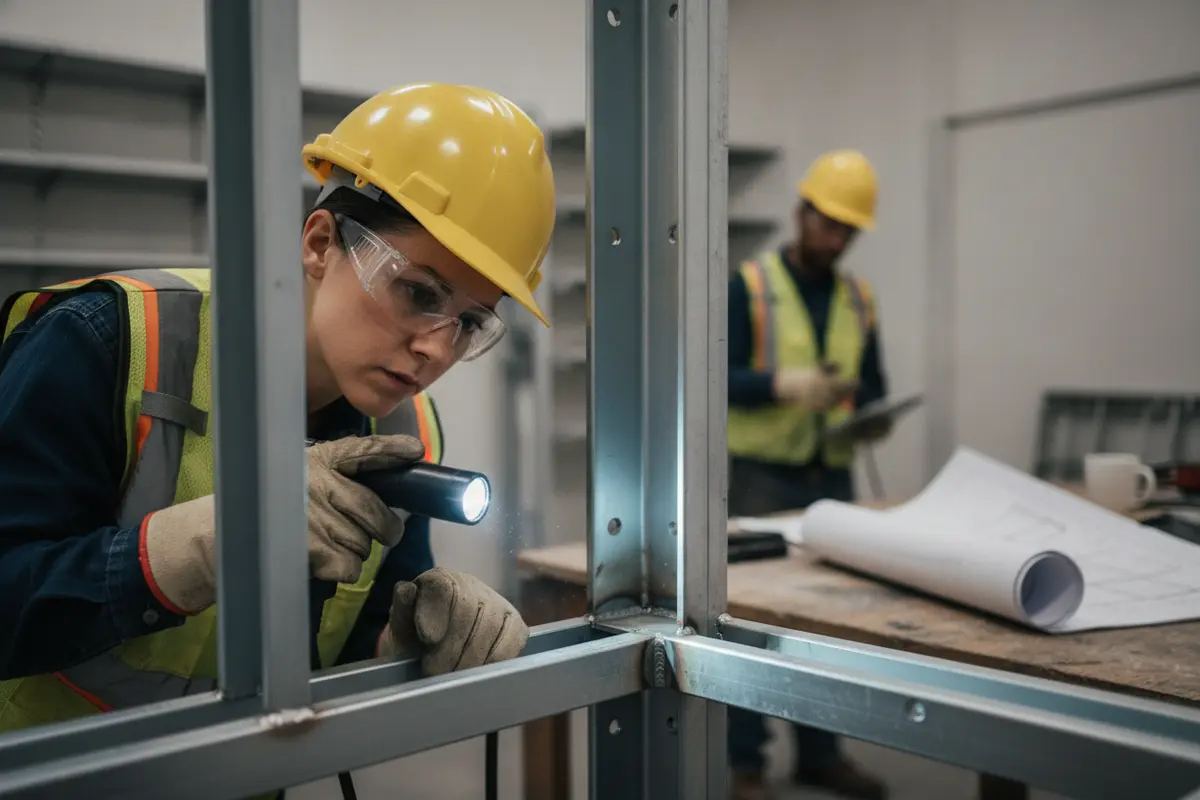
Be clear about what is—and is not—being requested. Visual observation of work in the assigned inspection scope is not automatically the same as nondestructive examination (NDE), laboratory testing, or a separate material test. The project documents and RDP should establish whether any additional method is required, who arranges it, and how its results are reviewed. Do not describe the agency’s inspection as NDE unless that specific method is part of the defined service and assignment.
If the visit identifies a condition that needs review, record its location and notify the appropriate project contacts. The contractor should coordinate correction or documentation with the RDP. The inspecting agency reports its findings within its role; the RDP determines whether a design or specification issue requires a formal response or revised documents.
Takeaway: Keep welds identifiable, visible, and safely accessible, and schedule before another operation conceals the inspection area.
What records help the team keep inspection and testing aligned?
Records let the project team trace field work back to the approved scope and understand what was observed. The specific records required vary by job, so use the contract documents and directions from the RDP rather than assuming that one universal checklist applies to every aluminum weld.
| Record or reference | Who typically provides or maintains it | How it supports coordination |
|---|---|---|
| Approved drawings and details | RDP and project team | Identifies the intended component, connection, and applicable inspection scope. |
| Applicable project specifications | RDP and contractor | States project-specific requirements and acceptance criteria for the work. |
| Fabrication or installation records, when required | Fabricator or contractor | Helps connect the installed work to the project’s specified materials and process documentation. |
| Separate test reports, when required | Testing provider or responsible project party | Documents test work that is distinct from the special inspection observation. |
| Inspection reports and disposition of findings | Inspecting agency and project team | Tracks observations, open items, responses, and closeout status. |
This table is a coordination aid, not a declaration that each record is required on every project. Confirm which documents apply, who is responsible for producing them, and where the project team will retain them. If test reports are part of the scope, confirm that the correct parties receive and review them. A report from a test provider and an inspection report have different purposes and should not be treated as interchangeable.
Industry organizations publish technical resources, but the applicable project documents and current requirements govern a particular job. The American Welding Society website is a starting point for welding-related resources; it should not be used as a substitute for identifying the specific standard, edition, or acceptance criteria adopted for the project. Ask the RDP to identify the governing reference when it is not clear from the approved documents.
Where records do not match the installation—for example, a drawing identifies a different connection or the reported test location is unclear—pause and reconcile the discrepancy with the responsible parties. Do not infer acceptance from the presence of a document alone. The records should describe the actual work and support the required review.
Takeaway: Keep approved design information, inspection reports, and any separately required test records distinct, traceable, and available to the people responsible for review.
How do responsibilities differ among the project team?
Clear role boundaries reduce confusion when a field condition differs from a drawing or when an inspection finding needs follow-up. The project documents and agreements determine the exact responsibilities, but these general distinctions can help the team route questions to the right person.
- Owner or owner’s representative: Supports project coordination and ensures the appointed project professionals and contractors can carry out their assigned work.
- RDP: Establishes the design intent and applicable inspection requirements, and addresses design interpretations, proposed changes, and technical questions within the RDP’s role.
- Contractor or installer: Plans the work, provides safe access, coordinates inspection timing, and addresses construction-related items through the project’s review process.
- Fabricator: Provides fabrication information and records when required by project documents and coordinates questions about the produced components with the contractor and design team.
- Special inspection agency: Performs and documents the assigned inspection activities, communicates findings through the established project channels, and does not take over design or construction responsibilities.
- Separate testing provider: Performs a separately assigned test when required and reports results according to the project arrangements.
These roles may interact, but they are not interchangeable. An inspector can report a visible condition or an inaccessible area without selecting a repair. A contractor can coordinate a proposed correction without independently changing the approved design. A test result can inform the project team’s evaluation without replacing the required inspection report. Route technical decisions to the RDP and follow the project’s documented process for revised details and closeout.
AKS Architectural and Engineering Services LLP can be contacted about its inspection services through the contact page. For company background, see about AKS and its inspection services. These pages provide service and contact information; they do not determine the obligations for an individual project’s approved scope.
Takeaway: The RDP resolves design questions, the contractor coordinates field readiness, and the agency reports only within its assigned inspection role.
What should the project team do when a finding or change arises?
Do not let an unresolved field issue disappear into a general punch list. Identify the location, describe the observed condition, and notify the contractor and RDP through the agreed project channels. If the condition affects the approved connection, material, or inspection criteria, the RDP should determine what documentation or direction is needed before the team treats the item as resolved.
Keep a simple item log that records the date, location, issue, responsible follow-up party, and the document or response that closes it. Tie each response to the inspection or test record it addresses. If the work is corrected, coordinate any required reinspection or additional review rather than presuming the initial visit closes the issue.
Changes can arise from field fit, revised dimensions, substitutions, or sequencing. The relevant question is not whether a change seems minor, but whether it affects a requirement or approved detail. Have the RDP review the condition and issue appropriate direction. Provide the inspection team with revised information if it changes the scope or reference documents for a later visit.
For TR1 and TR8 services more broadly, the inspection services page offers another way to review available service options. Confirm the appropriate service and project requirements before ordering; a product name alone cannot establish the required inspection scope.
Takeaway: Track every finding to a documented response, and obtain RDP direction when a field condition may affect approved design or inspection criteria.
How can teams plan a straightforward aluminum welding inspection?
A practical process keeps scheduling, field observation, and closeout connected. Use the following sequence as a project coordination tool, then adapt it to the approved documents and the team’s assigned responsibilities.
- Confirm the scope: Find the aluminum welding inspection requirement in the approved project documents and identify the specific work locations.
- Resolve open design questions: Ask the RDP to clarify unclear details, standards, acceptance criteria, or proposed changes before the work proceeds on an assumption.
- Coordinate readiness: Have the contractor confirm when the work will be complete, visible, identified, and safely accessible.
- Share relevant information: Provide the scope, drawing references, site contact, access details, and any project-required records for the visit.
- Separate inspection from testing: Confirm whether independent tests are required, who arranges them, and how results will be delivered and reviewed.
- Document findings: Keep inspection observations, test results, and RDP responses in the appropriate project records.
- Close open items: Coordinate corrections or further review, then confirm that the required reports and responses are complete for the project file.
Schedule with enough lead time for the contractor, RDP, and inspection agency to coordinate the right phase of work. The required notice and timing depend on the service arrangement and job conditions, so confirm scheduling directly rather than assuming a same-day visit is available. If the area will be concealed or access conditions will change, mention that when arranging the inspection.
Online service information can make the administrative step more direct, but it does not eliminate project coordination. AKS Architectural and Engineering Services LLP provides inspection services through its EZTR1 assumed name. Use the site to review available options, then communicate any project-specific scope questions before the visit.
Takeaway: Confirm scope, access, timing, testing responsibility, and the route for resolving findings before the work is covered.
Review the TR-1 aluminum welding inspection service
Frequently Asked Questions
Does every aluminum weld on a project require a TR1 inspection?
Not necessarily. Requirements depend on the approved project documents and applicable code provisions. Ask the RDP to identify the work subject to inspection rather than applying one assumption to every aluminum component.
Is a special inspection the same as nondestructive examination?
No. A special inspection and a separately specified examination or test are distinct activities. Confirm the required methods, responsible provider, and reporting process in the project documents and with the RDP.
Can the inspector approve a field design change?
The inspection role does not replace the RDP’s responsibility for design decisions. Send proposed changes or unclear conditions to the RDP and provide the inspection team with revised approved information when relevant.
What if the welds are inaccessible when the inspector arrives?
Tell the project team and inspection agency promptly. Coordinate a suitable time before the work is concealed, or ask the RDP how to proceed if access has already been lost. Do not assume an inaccessible condition can be accepted without review.
Takeaway: Project documents and the RDP define the inspection scope; coordinate separate testing and design decisions with the responsible parties.
With the approved scope, accessible work, and clear records in place, the project team can coordinate an aluminum welding inspection without confusing observation, testing, and design approval. Confirm requirements for the specific job before scheduling or covering the work.
Leave a Reply