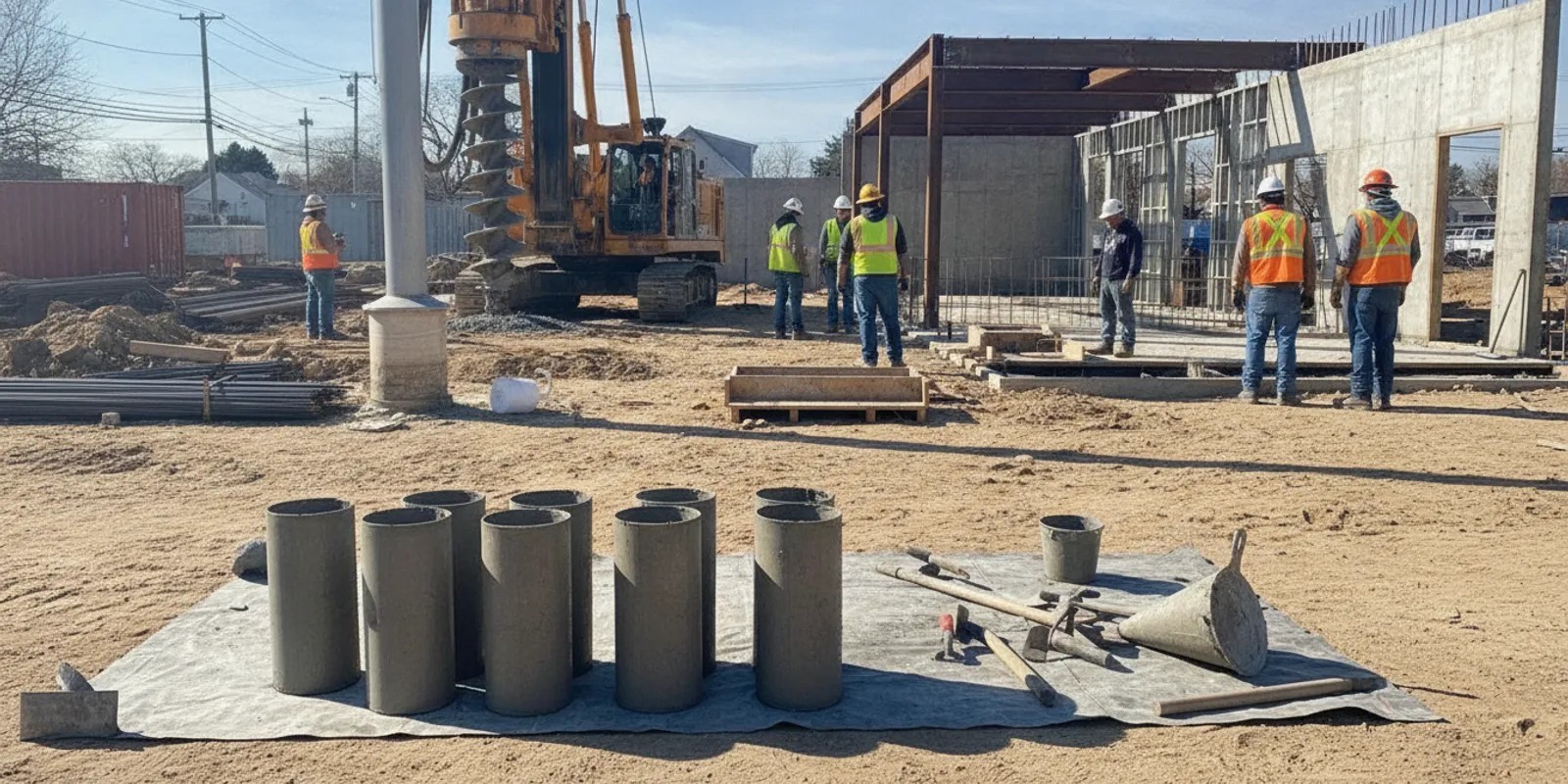
When a project includes concrete and foundation work, understanding NYC TR2 vs TR5 inspection helps the team ask the right scheduling question: is the immediate task concrete sampling and testing, deep foundation inspection, or both? TR2 and TR5 address different activities. Their names may appear in the same construction conversation, but the records and field milestones are not interchangeable. Use the approved project documents to confirm what applies to the specific job.
What does TR2 address?
TR2 is associated with concrete sampling and testing. For planning purposes, the central questions are which concrete work is identified in the project documents, whether sampling or testing is specified, and how the samples and results will be tracked. The actual scope comes from the approved documents and applicable project requirements. The fact that concrete appears somewhere on a project does not, by itself, answer whether or how sampling is required.
Concrete is used in many kinds of construction work. A project may include a slab, wall, footing, or concrete used as part of a foundation system. A team should avoid treating every such activity as automatically identical. Review the drawings, specifications, inspection schedule, and other project records for the requirements that apply to the actual placement. If details are unclear or documents seem inconsistent, ask the design professional or other appropriate project authority to clarify before turning a general description into a field instruction.
Once the relevant work is identified, planning can make the sampling process easier to coordinate. The team can note the expected placement window, identify who will coordinate access, confirm how the concrete and samples will be identified, and decide where resulting records will be kept. These are planning prompts, not a substitute for the project’s specified sampling procedure. For a route to the agency’s online service information, browse the inspection service catalog and look for the applicable concrete testing details.
What does TR5 address?
TR5 concerns deep foundation inspection, including pile-related work. The planning question is not simply whether concrete is present. It is whether the project includes a deep foundation operation that must be inspected, and what the approved documents say about the applicable scope and timing. An inspection of the foundation operation and a concrete sample provide different kinds of project information.
For example, a pile installation may involve materials or concrete, but sampling concrete does not document the installation activity. In the other direction, an inspection associated with deep foundation work does not replace concrete sampling and testing that is separately specified. Keep those questions distinct in the schedule, request, and records. The TR5 pile-driving service category can help readers locate service information, but project documents still govern the actual work scope.
When examining a project plan, look for the named foundation system and the sequence of work. Ask what activity will take place, when it will be observable, and whether the operation will become covered or inaccessible afterward. The goal is to align any required inspection with the actual work, not to infer a requirement solely from a short label or from the presence of concrete.
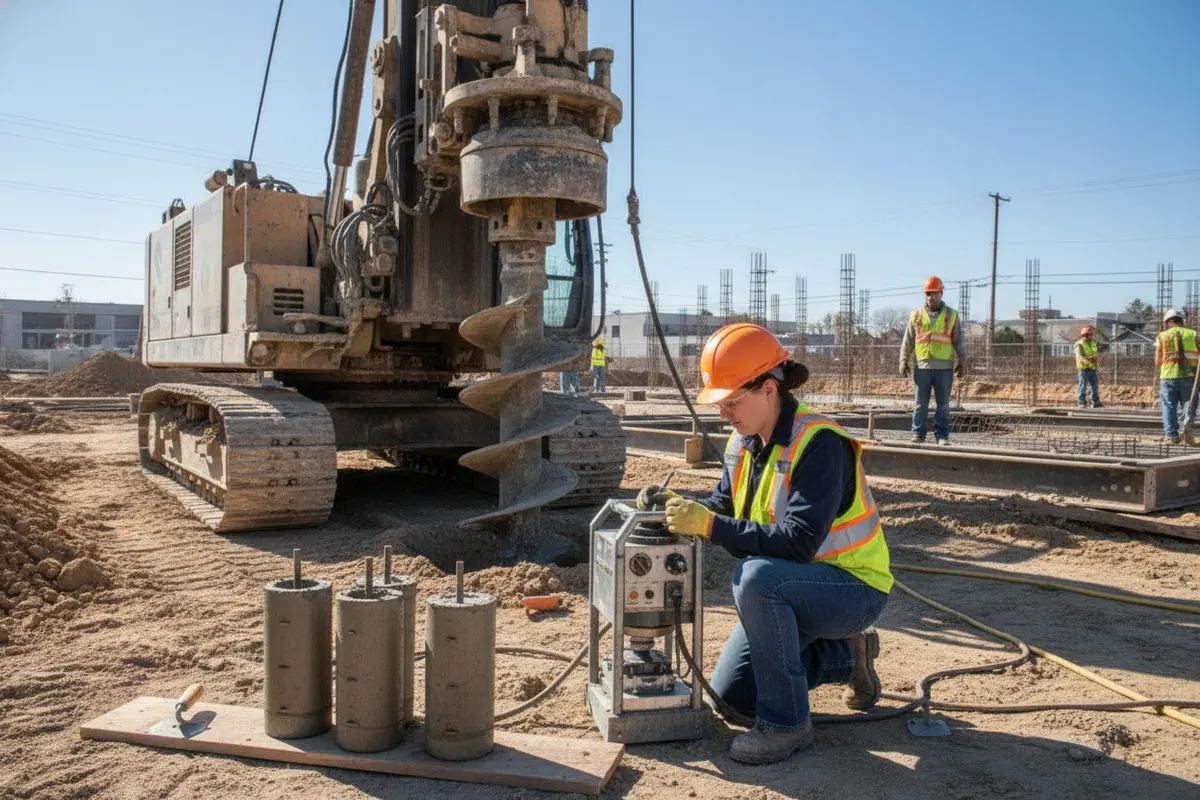
How do TR2 and TR5 compare?
The comparison is easiest when the team starts with the activity being documented. TR2 relates to concrete sampling and testing. TR5 relates to inspection of deep foundation work. The following table is a planning aid; it does not determine which requirements apply to a particular project.
| Planning point | TR2 concrete sampling and testing | TR5 deep foundation inspection |
|---|---|---|
| Activity to identify | Concrete placement with applicable sampling or testing instructions | Deep foundation work, such as a pile operation identified in project documents |
| Useful scheduling cue | Expected placement window and the timing described in the project requirements | Planned foundation operation and the milestone when the work can be observed |
| Coordination focus | Sample timing, access, sample identification, and test-result records | Access and inspection timing around the foundation sequence, with related records |
| What the record is about | Samples and testing information for the specified concrete work | Inspection documentation for the applicable deep foundation activity |
| Does it replace the other? | No. Concrete testing does not establish that a deep foundation operation was inspected. | No. Foundation inspection does not replace specified concrete sampling or testing. |
When might a project need both?
A project may have a deep foundation operation and separate concrete work with sampling or testing instructions. The two obligations can occur during the same broad construction phase without being the same task. If the schedule has a single entry called “foundation inspection,” it may be too vague to tell the team what must happen, who should be present, or what records need to be collected.
Consider a hypothetical job where foundation piles are planned first, followed by concrete work elsewhere on the site. A useful planning sheet lists the pile operation and concrete placement on separate lines. For each line, the coordinator checks the governing documents, identifies the anticipated date or work window, names a contact who can confirm field readiness, and records the relevant request and report references. If the concrete placement date shifts, that change does not automatically tell the team whether the pile inspection date has changed too. The schedule should be updated activity by activity.
Another scenario is concrete used in a foundation element. Here, both questions still matter: what inspection of the deep foundation work is called for, and what sampling or testing is specified for concrete? The team should not assume that one task covers the other merely because both relate to one physical element. Review the scope and coordinate each requirement with the people responsible for the work and the project documents.
Use the special inspection FAQ as a place to look for general service and process information. It cannot make a project-specific determination. Where a plan, specification, or filing record does not clearly resolve the scope, send the question to the design professional or the authority responsible for that decision.
How should teams map the work to field milestones?
Begin with a short, document-based inventory rather than a broad phase label. The intent is to connect each required activity with a point in the construction sequence when coordination is possible.
- Collect the current project references. Bring together the approved drawings, specifications, inspection schedule, and other documents that identify the relevant work. Check that the team is not relying on an older schedule or superseded sheet.
- List activities separately. Create one line for each applicable concrete sampling or testing task and a separate line for each deep foundation operation needing inspection. Use the project’s own terminology where possible.
- Identify the observable milestone. Write down what work is expected to be underway when coordination is needed. Note if a step will become covered, inaccessible, or difficult to verify after subsequent work proceeds.
- Connect a date window to a responsible contact. A tentative date is more useful when someone on the project can confirm whether the activity remains on schedule and whether the site is ready.
- Confirm requirements before treating the plan as final. Ask for clarification when a document does not say what the team needs to know. Do not fill gaps by assuming that TR2 or TR5 automatically applies to every similar-looking activity.
- Track records against the activity. Keep sample identification and test information associated with the relevant concrete work. Keep deep foundation inspection documentation associated with the operation it describes.
This simple matrix can be maintained in a project tracker:
- Activity: the concrete placement or foundation operation, described in project terms.
- Reference: drawing, specification, schedule entry, or other document that identifies the requirement.
- Expected window: the current estimate and the person who will confirm it.
- Readiness: access, site contact, work sequence, and any relevant preconditions.
- Record location: where the request, sample information, report, or inspection documentation will be filed.
Use the tracker to support communication, not to replace the official documents. A row marked “TR2” or “TR5” without an activity, reference, and milestone may not give the field team enough information to act.
What should a clear inspection or testing request include?
A useful request makes the planned activity understandable to the person coordinating it. Include the project address and a reliable site contact, describe the work in plain terms, and identify the anticipated date or work window. Point to the project documents that define the relevant scope. For concrete work, note the placement and the applicable sampling or testing instructions available to the team. For deep foundation work, describe the operation and where it sits in the sequence.
Before sending, check whether the request reflects the latest schedule and whether access arrangements are known. If a delivery or other prerequisite is uncertain, state that rather than presenting a tentative plan as confirmed. Include the information needed for coordination, while following the project’s procedures for sharing records. When requirements are not clear, ask the appropriate design or project authority instead of relying on a generic comparison article.
AKS Architectural & Engineering Services, LLP identifies itself publicly as a NYC DOB Registered Class 2 Special Inspection Agency and says its focus is small and medium projects. Its about page provides general information about the agency. Readers can use the contact page to raise service questions and share the project context needed to discuss a request.
What can go wrong when the two activities are confused?
- One calendar entry hides two different tasks. Calling everything “foundation inspection” can conceal a separate concrete sampling event. Split the schedule lines and give each one a clear milestone.
- A test record is treated as proof of an inspection. A concrete result does not document the observed installation of a deep foundation element. File and review records for what they actually cover.
- A broad phase is mistaken for a specific trigger. “Foundation week” says little about the exact placement or operation. Use the documents to name the activity and expected work window.
- The request comes after the work changes. When a date shifts, notify the relevant coordinator and update the affected line. Do not assume every related activity has moved in the same way.
- A generic online description is used as a project ruling. Service pages and guides provide context, while approved documents and project authorities determine the specific scope.
- The team does not agree on where records belong. Establish a consistent file or tracker reference so people can locate the sample details, results, request, and inspection documentation associated with each task.
These are preventable coordination problems. At each planning meeting, ask whether the next activity is concrete work, deep foundation work, or both, and then verify each line against the documents. If the sequence or documents change, carry the update into the schedule and let the relevant project contacts know.
How can project teams use inspection references effectively?
Construction inspection involves reading the project information as well as arranging field activity. The Iowa LTAP construction inspection video series describes basic plan drawings and documentation needed for inspection duties. It is general educational material, not a New York City code determination, but it reinforces a useful habit: connect field work to the plans and keep documentation organized.
For NYC project decisions, keep the local approved documents at the center of the process. A general resource can help a team think about plan references and records; it cannot say whether a particular project requires TR2, TR5, or both. If the team is comparing service routes, it can also review the agency’s TR1 special inspection category for broader catalog context, while keeping the current question focused on the actual concrete and deep foundation activities.
Frequently asked questions
Does TR2 replace TR5 if a pile uses concrete?
No. TR2 relates to concrete sampling and testing; TR5 relates to deep foundation inspection. If project requirements call for both, coordinate and retain the records for each separately.
Does every concrete placement require TR2?
Do not assume that all placements have identical requirements. Review the approved project documents and applicable requirements to determine whether sampling or testing is specified for that work.
Does every foundation project require TR5?
This comparison cannot determine that for an individual job. Check the foundation scope and inspection requirements in the project documents, and ask the appropriate project authority if the answer is unclear.
When should the team start coordinating?
Start during planning, before the relevant operation or placement is imminent. Early coordination helps connect each request to a work milestone, confirm access, and identify missing information while there is still time to resolve it.
What if the work date changes?
Update the schedule and notify the relevant contacts as soon as the change is known. Review concrete and deep foundation activities separately so a change to one does not leave the other with an outdated date or assumption.
Keep each request tied to its activity
The practical distinction is straightforward: TR2 concerns concrete sampling and testing, while TR5 concerns deep foundation inspection. Confirm the scope in the approved documents, schedule each activity against its own milestone, and keep its records tied to the work it describes.
With separate activity lines and clear project references, teams can coordinate concrete testing and deep foundation inspection without treating one as a substitute for the other.
Leave a Reply